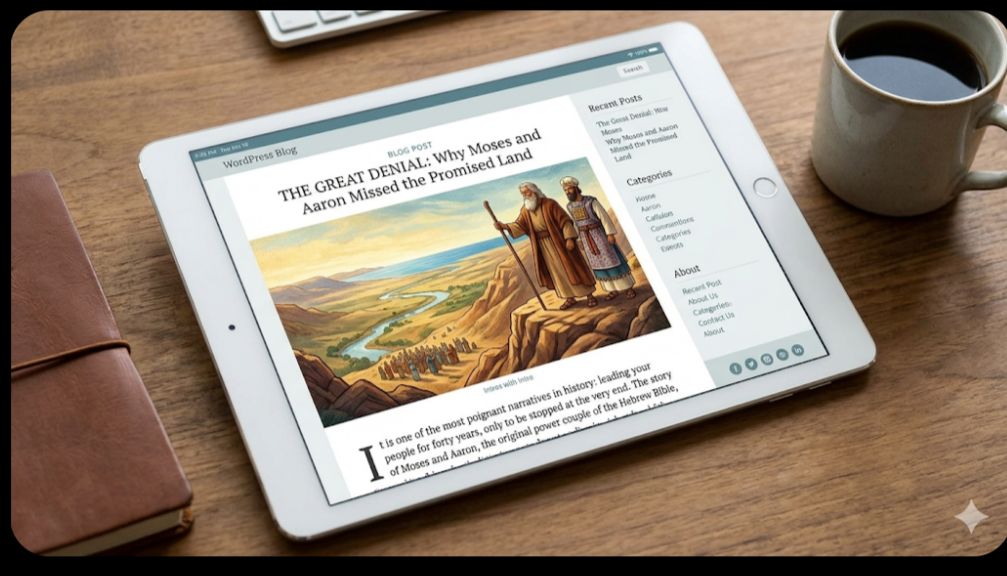
Few moments in the Bible feel as surprising—and even unsettling—as this one: after leading the Israelites out of slavery, through hardship, rebellion, and decades in the wilderness, Moses and Aaron are told they will not enter the Promised Land. For many readers, the question comes quickly: why would such faithful leaders be denied the very destination they worked toward their entire lives?
The answer lies in a brief but loaded episode recorded in the Book of Numbers—a story that has echoed through centuries of interpretation.
A Moment of Pressure in the Wilderness
The Israelites were again facing a familiar crisis: no water. Their complaints were sharp, even accusatory. Leadership under these conditions was relentless, and Moses had borne the weight of it for years.
God’s instruction was clear: speak to the rock, and it would yield water.
But in that tense moment, Moses did something different. Standing before the people, he rebuked them angrily and then struck the rock twice with his staff. Water flowed, and the immediate crisis was solved—but something deeper had gone wrong.
What Went Wrong?
At first glance, the outcome seems confusing. The miracle still happened. The people got water. So why the severe consequence?
The text suggests three intertwined issues:
1. Disobedience, even if small, still mattered
Moses was told to speak to the rock, not strike it. The difference may seem minor, but in the biblical narrative, precise obedience reflects trust. Moses acted outside those instructions.
2. A failure to reflect God accurately
In his frustration, Moses said, “Shall we bring you water out of this rock?”—language that appeared to shift attention from God to himself and Aaron. The act risked misrepresenting who was truly providing for the people.
3. Leadership carries heavier responsibility
Moses and Aaron weren’t ordinary participants; they were the visible representatives of God to Israel. Their actions set the tone. In that role, even a moment of anger or misjudgment carried amplified consequences.
Why Aaron Shared the Consequence
Aaron did not strike the rock, yet he shared the judgment. As high priest and co-leader, he stood alongside Moses in representing God before the people. In the biblical worldview, leadership is rarely individual—it is shared, and so is accountability.
A Sobering Outcome
Because of this incident, God declared that neither Moses nor Aaron would lead the people into the land promised to their ancestors.
Aaron’s journey ends earlier, on Mount Hor. Moses continues leading for a time, but eventually, in the Book of Deuteronomy, he is brought to a mountain where he is allowed to see the Promised Land—stretching out before him—but not enter it.
It’s a powerful image: a leader who carried a vision for decades, standing at its edge.
A Story That Still Resonates
At its core, this episode is not just about punishment. It’s about the tension between calling and character, responsibility and emotion, faithfulness and failure.
Moses remains one of the most significant figures in the Bible—not because he was perfect, but because his story is honest. His exclusion from the Promised Land is not the end of his impact; in many ways, it deepens it.
Conclusion: A Poignant End and a Powerful Lesson
The story of Moses and Aaron’s exclusion from the Promised Land is undeniably tragic.
After dedicating their entire lives to a mission, they fell short of the personal fulfillment at the final hurdle.
However, the text uses their story to communicate two critical principles: First, that the true hero of the epic is God, not human leadership; and second, that authority demands profound integrity and absolute obedience. Their physical rest was barred, but their legacy as the foundational leaders of the nation was secured.


